
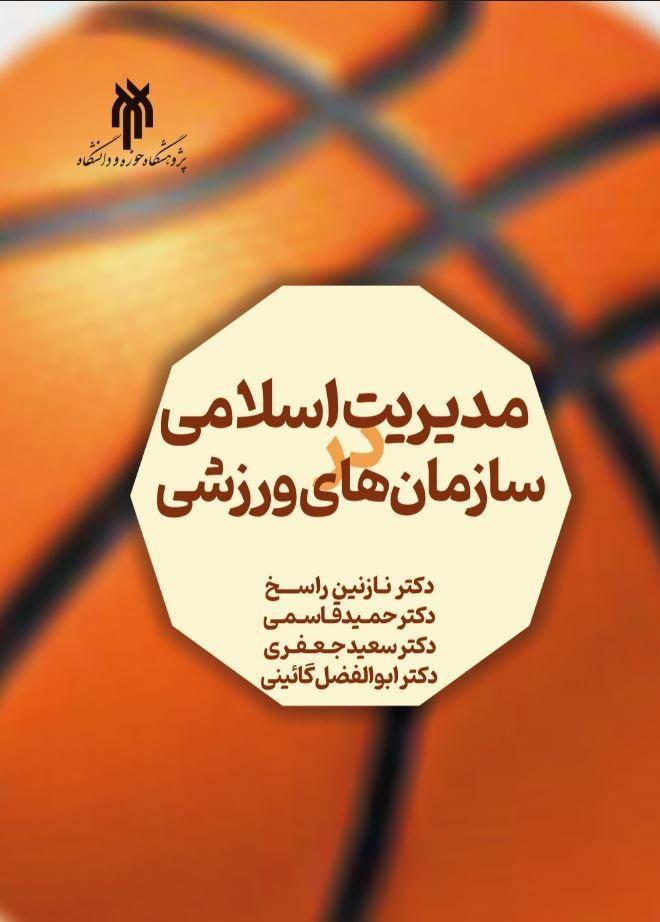
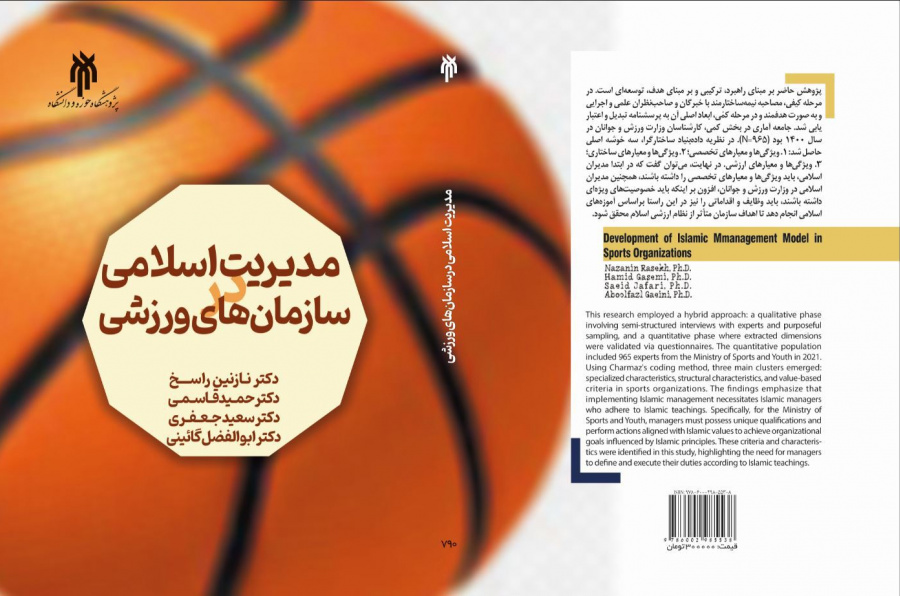
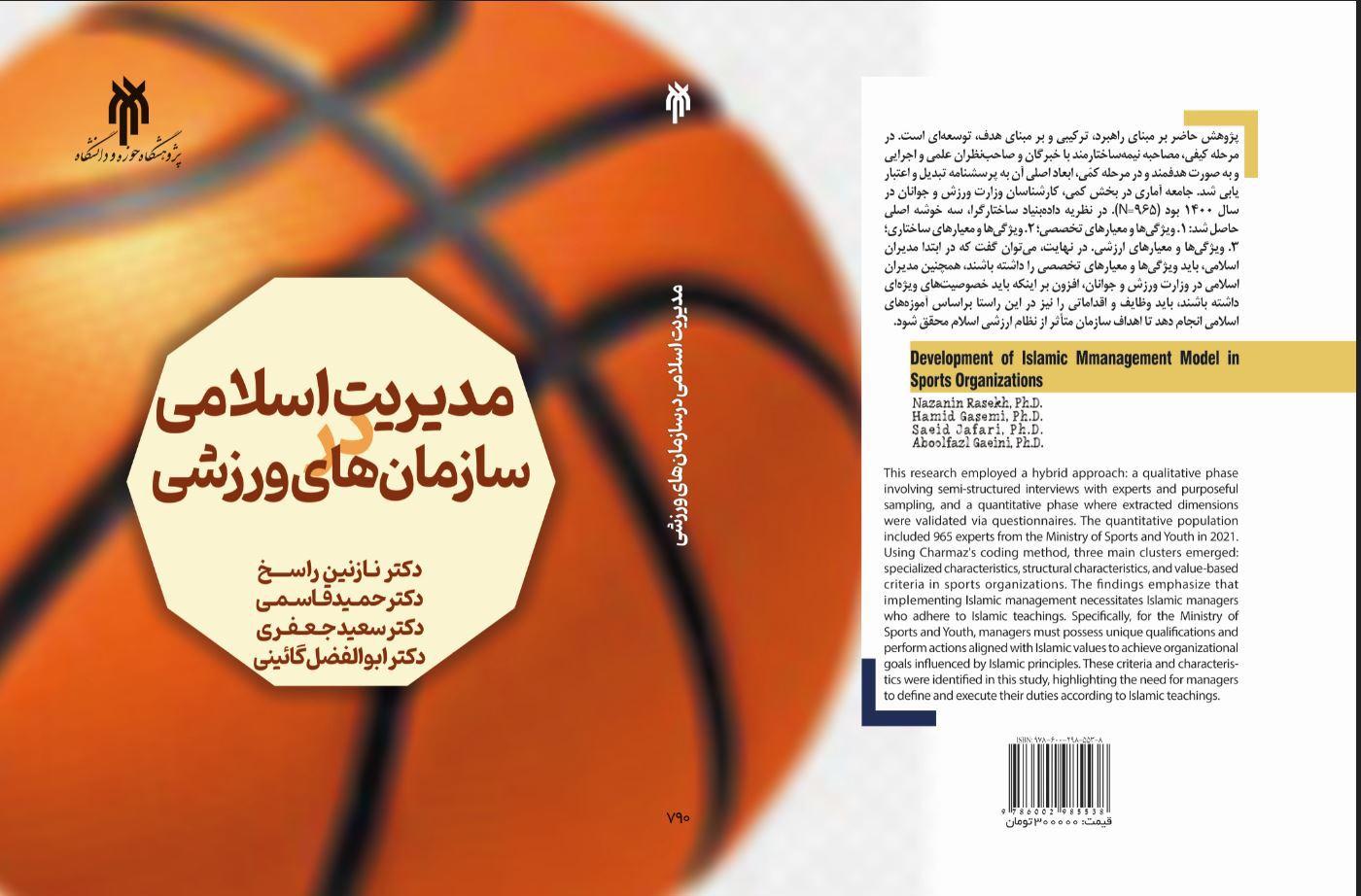
مدیریت اسلامی در سازمانهای ورزشی
development of Islamic Mmanagement Model in Sports Organizations
پژوهش حاضر بر مبنای راهبرد، ترکیبی و بر مبنای هدف، توسعهای است. در مرحله کیفی، مصاحبه نیمهساختارمند با خبرگان و صاحبنظران علمی و اجرایی و به صورت هدفمند و در مرحله کمّی، ابعاد اصلی آن به پرسشنامه تبدیل و اعتباریابی شد. جامعه آماری در بخش کمی، کارشناسان وزارت ورزش و جوانان در سال 1400 بود (965=N). در نظریه دادهبنیاد ساختارگرا، سه خوشه اصلی حاصل شد: 1. ویژگیها و معیارهای تخصصی؛ 2. ویژگیها و معیارهای ساختاری؛ 3. ویژگیها و معیارهای ارزشی. در نهایت، میتوان گفت که در ابتدا مدیران اسلامی، باید ویژگیها و معیارهای تخصصی را داشته باشند، همچنین مدیران اسلامی در وزارت ورزش و جوانان، افزون بر اینکه باید خصوصیتهای ویژهای داشته باشند، باید وظایف و اقداماتی را نیز در این راستا براساس آموزههای اسلامی انجام دهد تا اهداف سازمان متأثر از نظام ارزشی اسلام محقق شود.
development of Islamic Mmanagement Model in Sports Organizations
Nazanin Rasekh, Ph.D.
Hamid Gasemi, Ph.D.
Saeid Jafari, Ph.D.
Aboolfazl Gaeini, Ph.D.
This research employed a hybrid approach: a qualitative phase involving semi-structured interviews with experts and purposeful sampling, and a quantitative phase where extracted dimensions were validated via questionnaires. The quantitative population included 965 experts from the Ministry of Sports and Youth in 2021. Using Charmaz's coding method, three main clusters emerged: specialized characteristics, structural characteristics, and value-based criteria in sports organizations. The findings emphasize that implementing Islamic management necessitates Islamic managers who adhere to Islamic teachings. Specifically, for the Ministry of Sports and Youth, managers must possess unique qualifications and perform actions aligned with Islamic values to achieve organizational goals influenced by Islamic principles. These criteria and characteristics were identified in this study, highlighting the need for managers to define and execute their duties according to Islamic teachings.
 سروش
سروش