
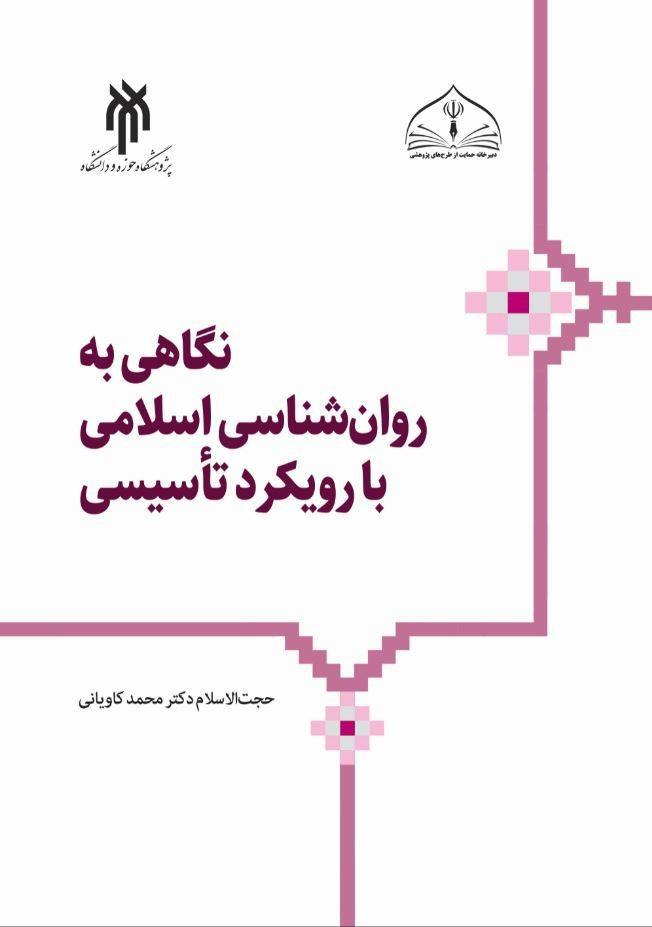
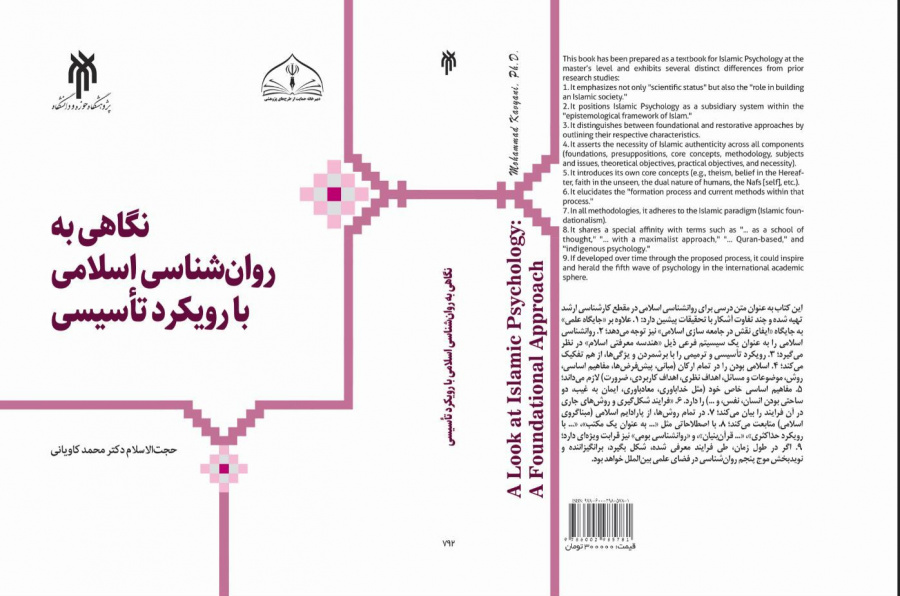
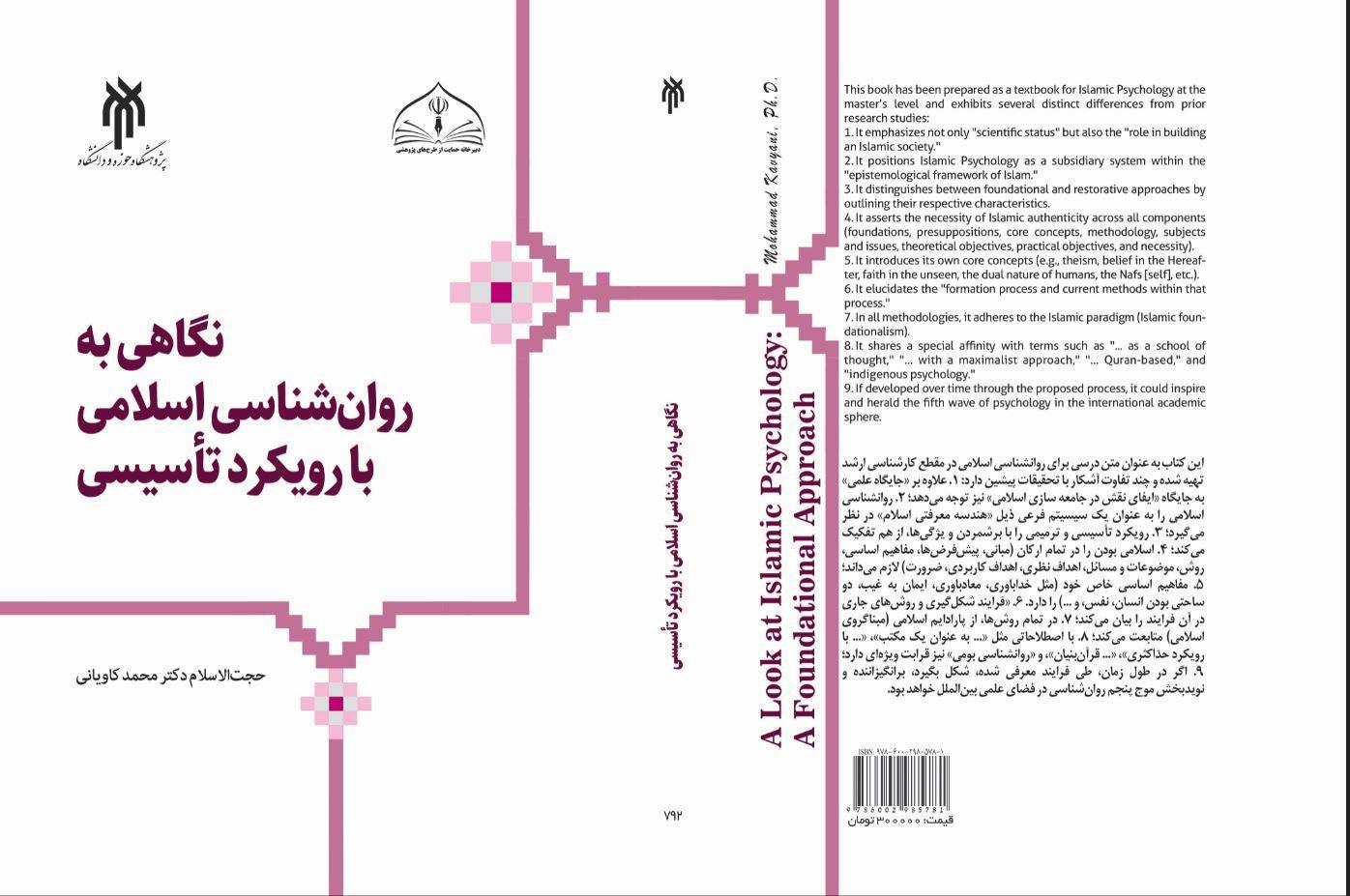
نگاهی به روانشناسی اسلامی با رویکرد تأسیسی
A Look at Islamic Psychology: A Foundational Approach
این کتاب به عنوان متن درسی برای روانشناسی اسلامی در مقطع کارشناسی ارشد تهیه شده و چند تفاوت آشکار با تحقیقات پیشین دارد: 1. علاوه بر «جایگاه علمی» به جایگاه «ایفای نقش در جامعه سازی اسلامی» نیز توجه میدهد؛ 2. روانشناسی اسلامی را به عنوان یک سیسیتم فرعی ذیل «هندسه معرفتی اسلام» در نظر میگیرد؛ 3. رویکرد تأسیسی و ترمیمی را با برشمردن و یژگیها، از هم تفکیک میکند؛ 4. اسلامی بودن را در تمام ارکان (مبانی، پیشفرضها، مفاهیم اساسی، روش، موضوعات و مسائل، اهداف نظری، اهداف کاربردی، ضرورت) لازم میداند؛ 5. مفاهیم اساسی خاص خود (مثل خداباوری، معادباوری، ایمان به غیب، دو ساحتی بودن انسان، نفس، و ...) را دارد. 6. «فرایند شکلگیری و روشهای جاری در آن فرایند را بیان میکند؛ 7. در تمام روشها، از پارادایم اسلامی (مبناگروی اسلامی) متابعت میکند؛ 8. با اصطلاحاتی مثل «... به عنوان یک مکتب»، «... با رویکرد حدّاکثری»، «... قرآنبنیان»، و «روانشناسی بومی» نیز قرابت ویژهای دارد؛ 9. اگر در طول زمان، طی فرایند معرفی شده، شکل بگیرد، برانگیزاننده و نویدبخش موج پنجم روانشناسی در فضای علمی بینالملل خواهد بود.
A Look at Islamic Psychology:
A Foundational Approach
Mohammad Kavyani, Ph.D
This book has been prepared as a textbook for Islamic Psychology at the master’s level and exhibits several distinct differences from prior research studies:
1. It emphasizes not only "scientific status" but also the "role in building an Islamic society."
2. It positions Islamic Psychology as a subsidiary system within the "epistemological framework of Islam."
3. It distinguishes between foundational and restorative approaches by outlining their respective characteristics.
4. It asserts the necessity of Islamic authenticity across all components (foundations, presuppositions, core concepts, methodology, subjects and issues, theoretical objectives, practical objectives, and necessity).
5. It introduces its own core concepts (e.g., theism, belief in the Hereafter, faith in the unseen, the dual nature of humans, the Nafs [self], etc.).
6. It elucidates the "formation process and current methods within that process."
7. In all methodologies, it adheres to the Islamic paradigm (Islamic foundationalism).
8. It shares a special affinity with terms such as "... as a school of thought," "... with a maximalist approach," "... Quran-based," and "indigenous psychology."
9. If developed over time through the proposed process, it could inspire and herald the fifth wave of psychology in the international academic sphere
 سروش
سروش