
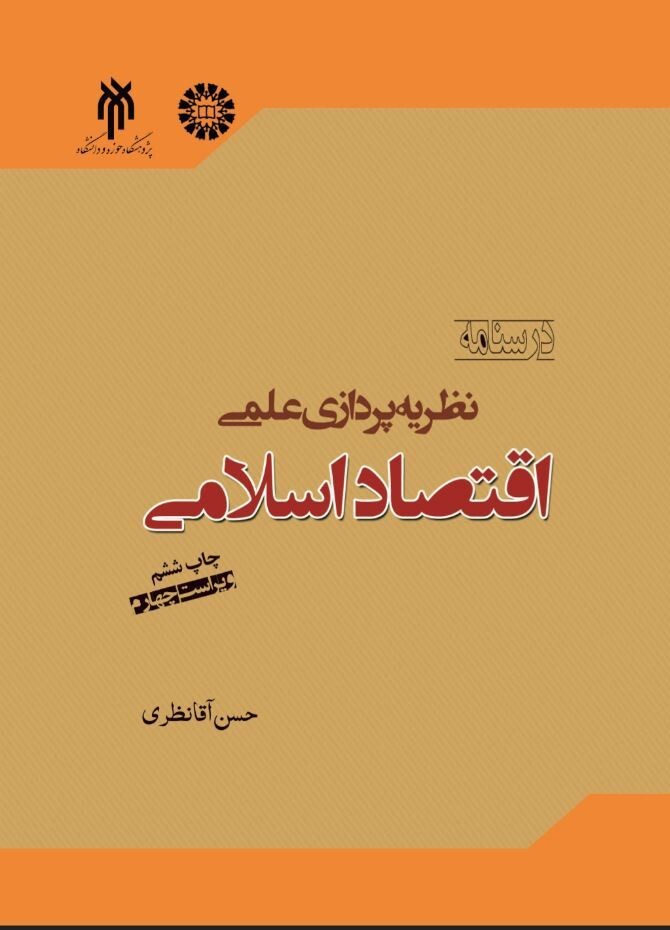
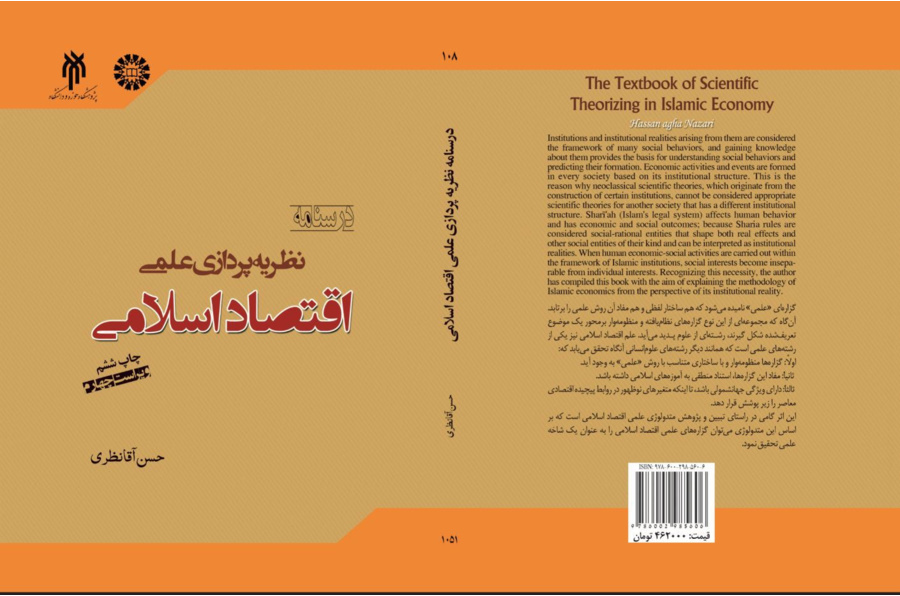
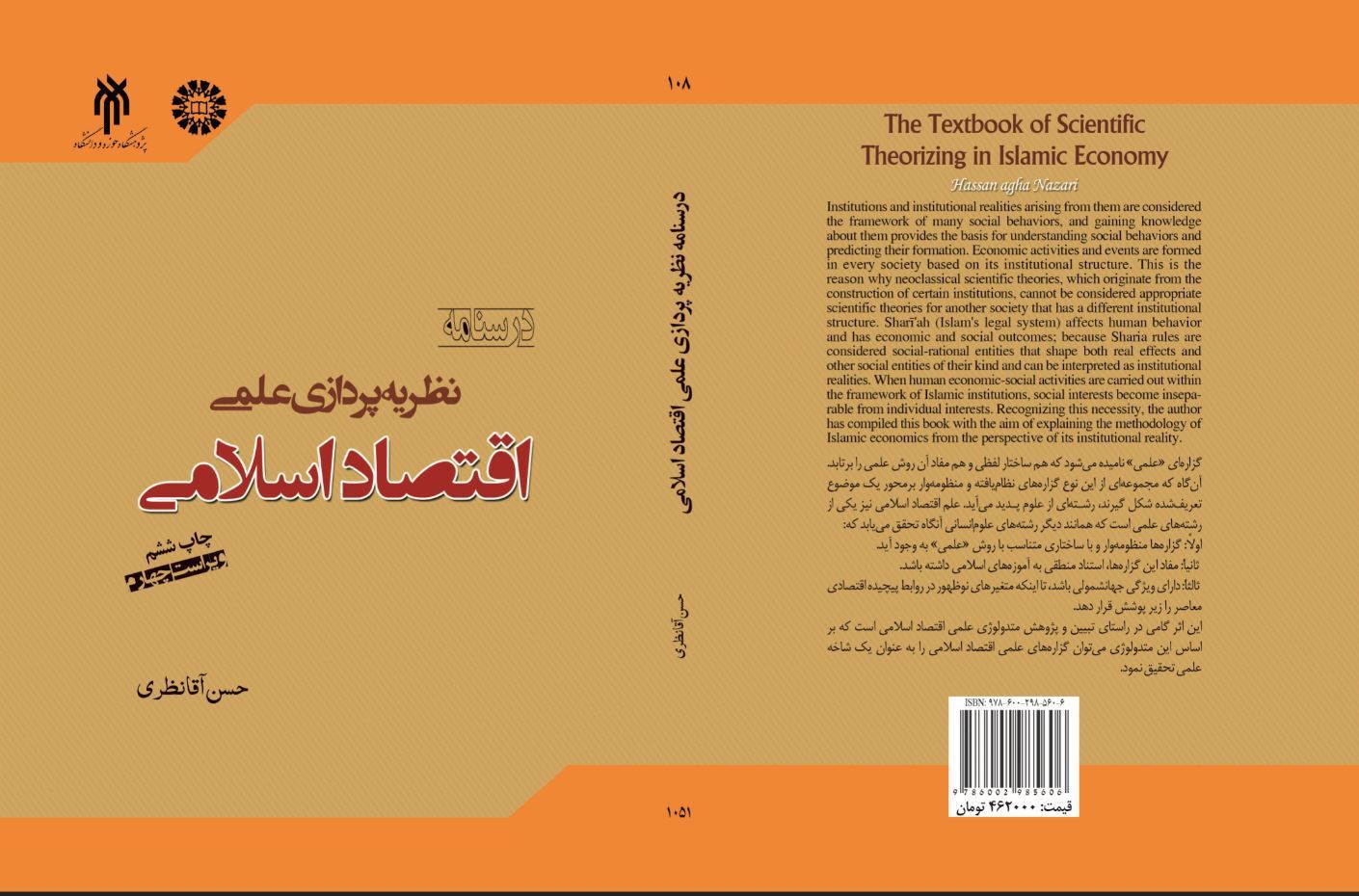
درسنامه نظریهپردازی اقتصاد اسلامی(ویراست چهارم)
The Textbook of Scientific Theorizing in Islamic Economy
گزارهای «علمی» نامیده میشود که هم ساختار لفظی و هم مفاد آن روش علمی را برتابد. آنگاه که مجموعهای از این نوع گزارههای نظامیافته و منظومهوار برمحور یک موضوع تعریفشده شکل گیرند، رشـتهای از علوم پـدید میآید. علم اقتصاد اسلامی نیز یکی از رشتههای علمی است که همانند دیگر رشتههای علومانسانی آنگاه تحقق مییابد که:
اولاً: گزارهها منظومهوار و با ساختاری متناسب با روش «علمی» به وجود آید.
ثانیاً: مفاد این گزارهها، استناد منطقی به آموزههای اسلامی داشته باشد.
ثالثاً: دارای ویژگی جهانشمولی باشد، تا اینکه متغیرهای نوظهور در روابط پیچیده اقتصادی معاصر را زیر پوشش قرار دهد.
این اثر گامی در راستای تبیین و پژوهش متدولوژی علمی اقتصاد اسلامی است که بر اساس این متدولوژی میتوان گزارههای علمی اقتصاد اسلامی را به عنوان یک شاخه علمی تحقیق نمود.
The Textbook of Scientific
Theorizing in Islamic Economy
Hassan agha Nazari
Institutions and institutional realities arising from them are considered the framework of many social behaviors, and gaining knowledge about them provides the basis for understanding social behaviors and predicting their formation. Economic activities and events are formed in every society based on its institutional structure. This is the reason why neoclassical scientific theories, which originate from the construction of certain institutions, cannot be considered appropriate scientific theories for another society that has a different institutional structure. Sharī'ah (Islam's legal system) affects human behavior and has economic and social outcomes; because Sharia rules are considered social-rational entities that shape both real effects and other social entities of their kind and can be interpreted as institutional realities. When human economic-social activities are carried out within the framework of Islamic institutions, social interests become inseparable from individual interests. Recognizing this necessity, the author has compiled this book with the aim of explaining the methodology of Islamic economics from the perspective of its institutional reality
 سروش
سروش