
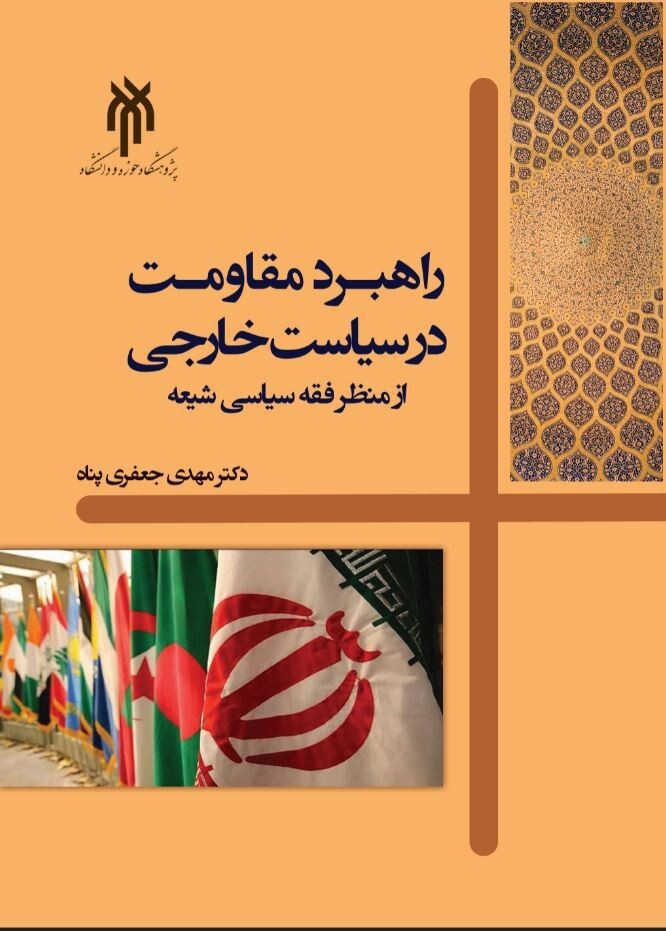
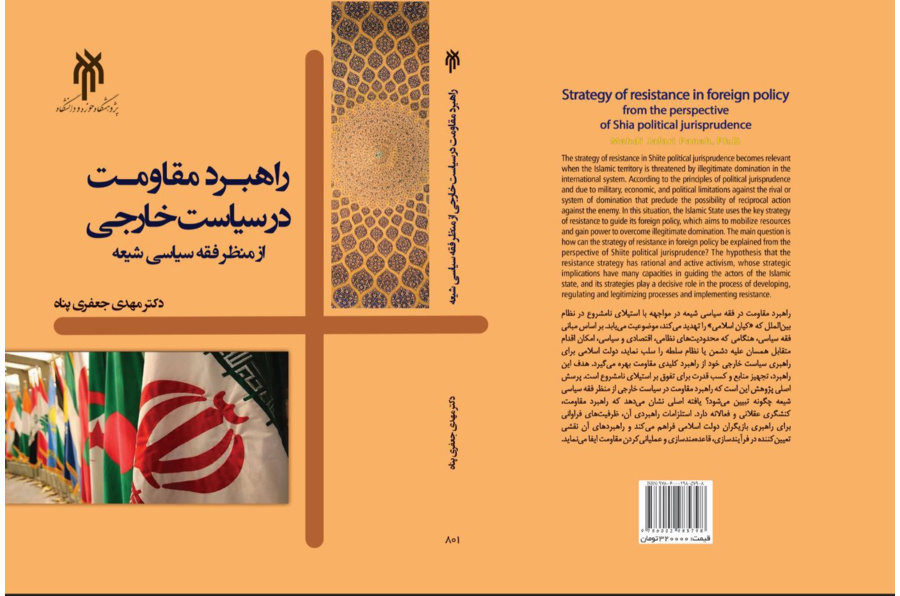
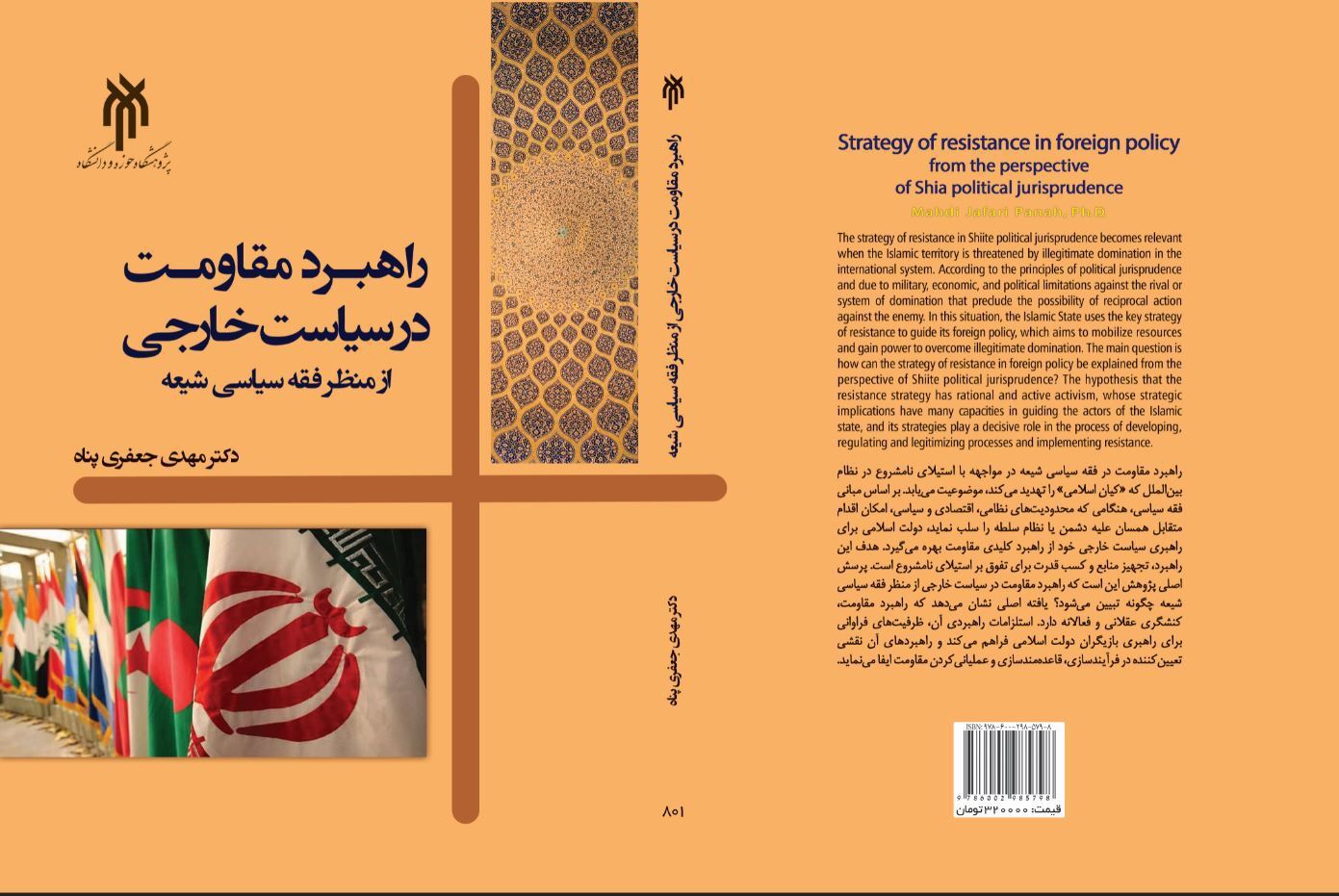
راهبرد مقاومت در سیاست خارجی از منظر فقه سیاسی شیعه
راهبرد مقاومت در فقه سیاسی شیعه در مواجهه با استیلای نامشروع در نظام بینالملل که «کیان اسلامی» را تهدید میکند، موضوعیت مییابد. بر اساس مبانی فقه سیاسی، هنگامی که محدودیتهای نظامی، اقتصادی و سیاسی، امکان اقدام متقابل همسان علیه دشمن یا نظام سلطه را سلب نماید، دولت اسلامی برای راهبری سیاست خارجی خود از راهبرد کلیدی مقاومت بهره میگیرد. هدف این راهبرد، تجهیز منابع و کسب قدرت برای تفوق بر استیلای نامشروع است. پرسش اصلی پژوهش این است که راهبرد مقاومت در سیاست خارجی از منظر فقه سیاسی شیعه چگونه تبیین میشود؟ یافته اصلی نشان میدهد که راهبرد مقاومت، کنشگری عقلانی و فعالانه دارد. استلزامات راهبردی آن، ظرفیتهای فراوانی برای راهبری بازیگران دولت اسلامی فراهم میکند و راهبردهای آن نقشی تعیینکننده در فرآیندسازی، قاعدهمندسازی و عملیانیکردن مقاومت ایفا مینماید.
Strategy of resistance in foreign policy
from the perspective
of Shia political jurisprudence
Mahdi Jafari Panah, Ph.D.
The strategy of resistance in Shiite political jurisprudence becomes relevant when the Islamic territory is threatened by illegitimate domination in the international system. According to the principles of political jurisprudence and due to military, economic, and political limitations against the rival or system of domination that preclude the possibility of reciprocal action against the enemy. In this situation, the Islamic State uses the key strategy of resistance to guide its foreign policy, which aims to mobilize resources and gain power to overcome illegitimate domination. The main question is how can the strategy of resistance in foreign policy be explained from the perspective of Shiite political jurisprudence? The hypothesis that the resistance strategy has rational and active activism, whose strategic implications have many capacities in guiding the actors of the Islamic state, and its strategies play a decisive role in the process of developing, regulating and legitimizing processes and implementing resistance
 سروش
سروش