
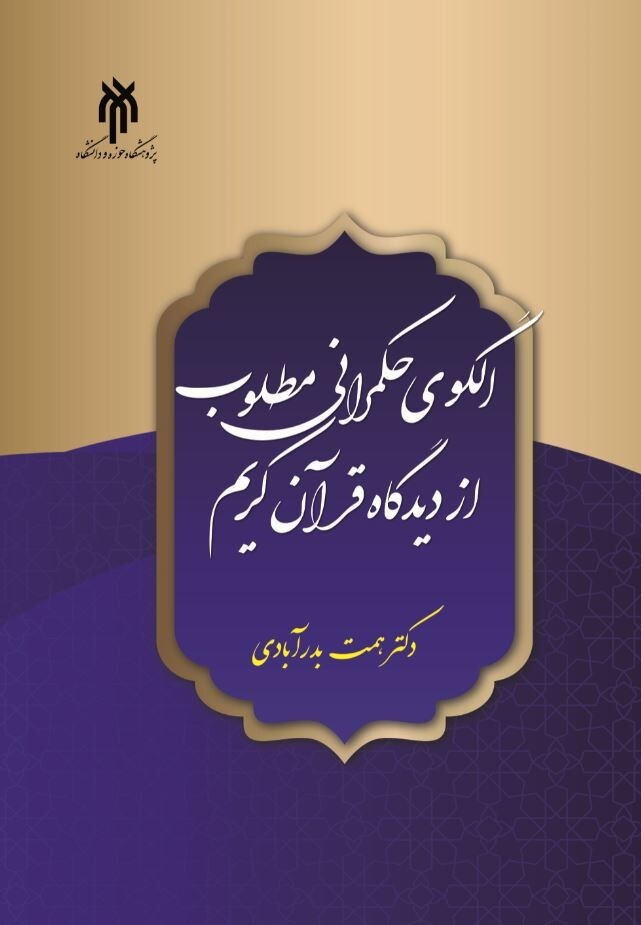
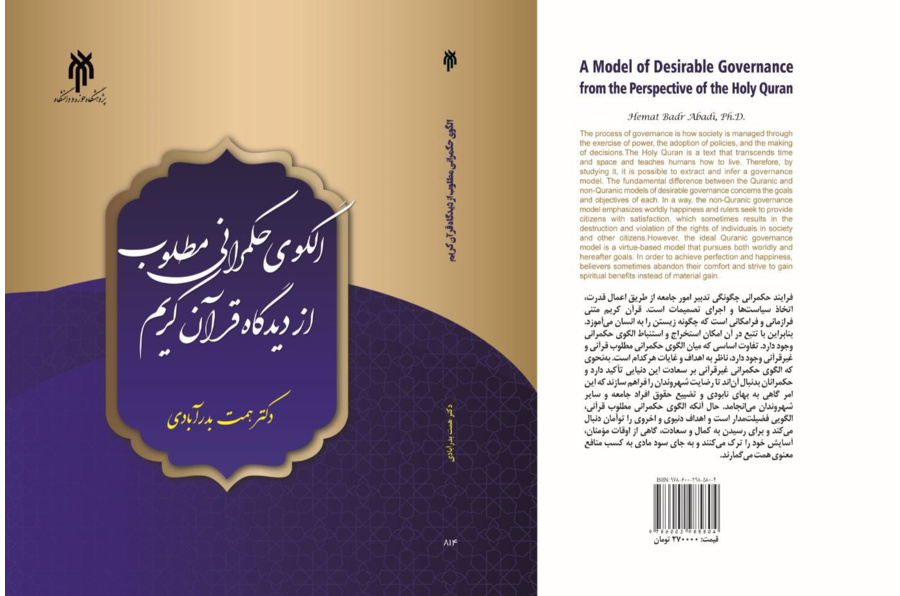
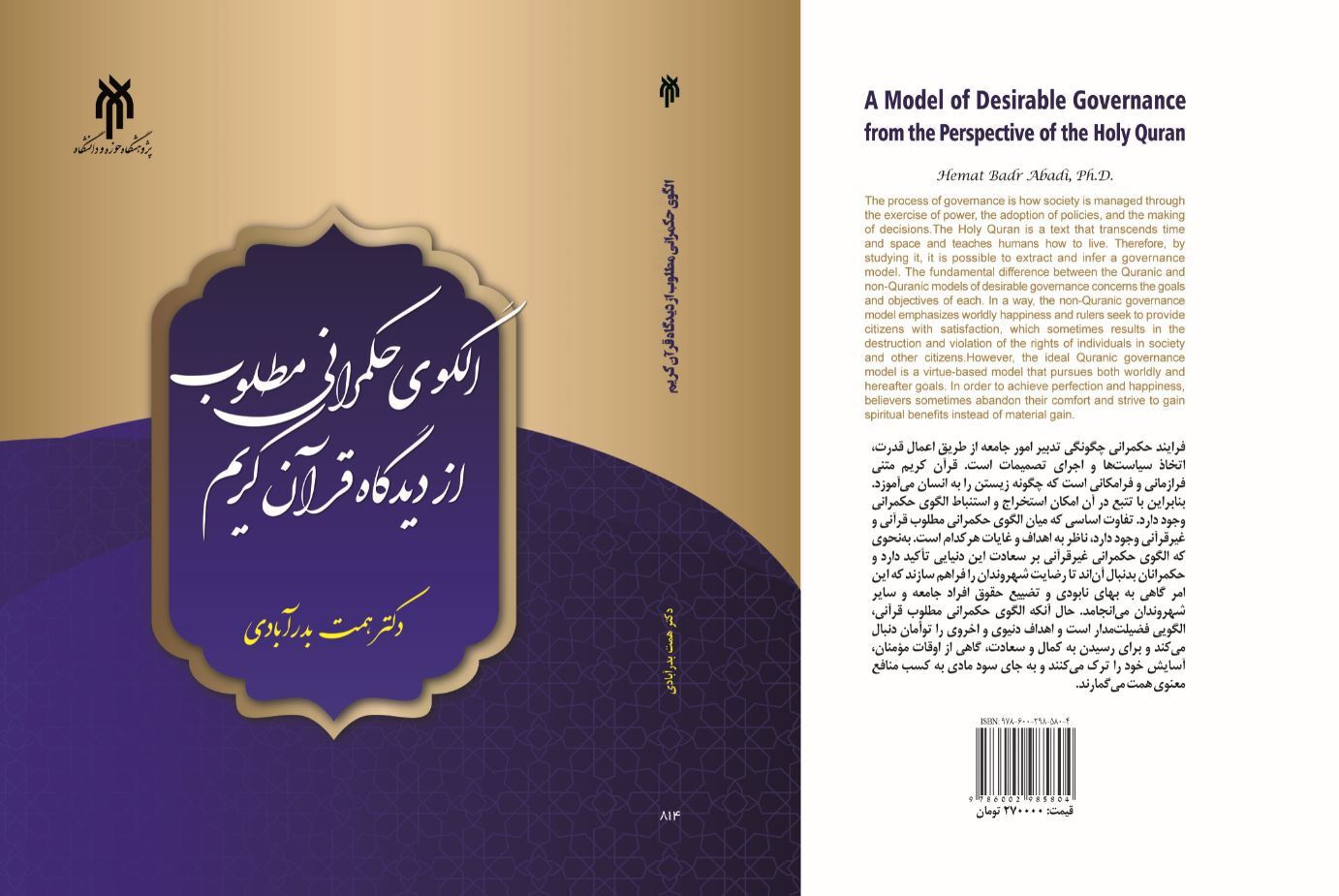
الگوی حکمرانی مطلوب از دیدگاه قرآن کریم
A Model of Desirable Governance from the Perspective of the Holy Quran Hemat Badr Abadi, Ph.D
فرایند حکمرانی چگونگی تدبیر امور جامعه از طریق اعمال قدرت، اتخاذ سیاستها و اجرای تصمیمات است. قرآن کریم متنی فرازمانی و فرامکانی است که چگونه زیستن را به انسان میآموزد. بنابراین با تتبع در آن امکان استخراج و استنباط الگوی حکمرانی وجود دارد. تفاوت اساسی که میان الگوی حکمرانی مطلوب قرآنی و غیرقرآنی وجود دارد، ناظر به اهداف و غایات هرکدام است. بهنحوی که الگوی حکمرانی غیرقرآنی بر سعادت این دنیایی تأکید دارد و حکمرانان بدنبال آناند تا رضایت شهروندان را فراهم سازند که این امر گاهی به بهای نابودی و تضییع حقوق افراد جامعه و سایر شهروندان میانجامد. حال آنکه الگوی حکمرانی مطلوب قرآنی، الگویی فضیلتمدار است و اهداف دنیوی و اخروی را توأمان دنبال میکند و برای رسیدن به کمال و سعادت، گاهی از اوقات مؤمنان، آسایش خود را ترک میکنند و به جای سود مادی به کسب منافع معنوی همت میگمارند.
A Model of Desirable Governance
from the Perspective of the Holy Quran
Hemat Badr Abadi, Ph.D.
The process of governance is how society is managed through the exercise of power, the adoption of policies, and the making of decisions.The Holy Quran is a text that transcends time and space and teaches humans how to live. Therefore, by studying it, it is possible to extract and infer a governance model. The fundamental difference between the Quranic and non-Quranic models of desirable governance concerns the goals and objectives of each. In a way, the non-Quranic governance model emphasizes worldly happiness and rulers seek to provide citizens with satisfaction, which sometimes results in the destruction and violation of the rights of individuals in society and other citizens.However, the ideal Quranic governance model is a virtue-based model that pursues both worldly and hereafter goals. In order to achieve perfection and happiness, believers sometimes abandon their comfort and strive to gain spiritual benefits instead of material gain
 سروش
سروش