
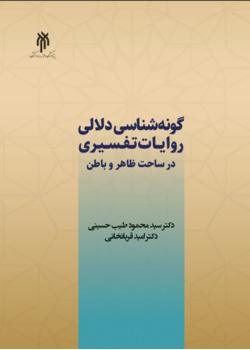
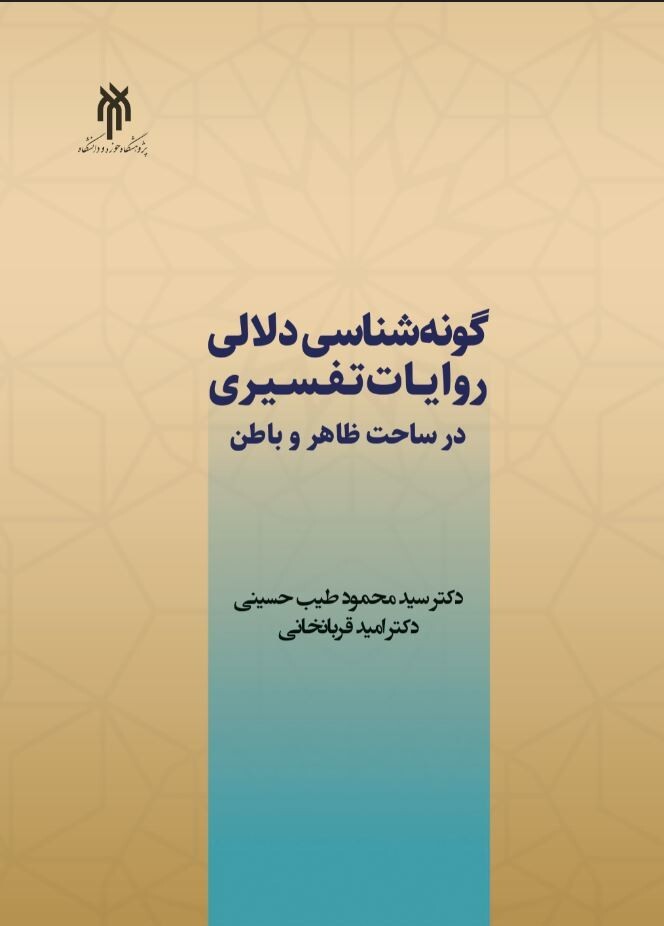
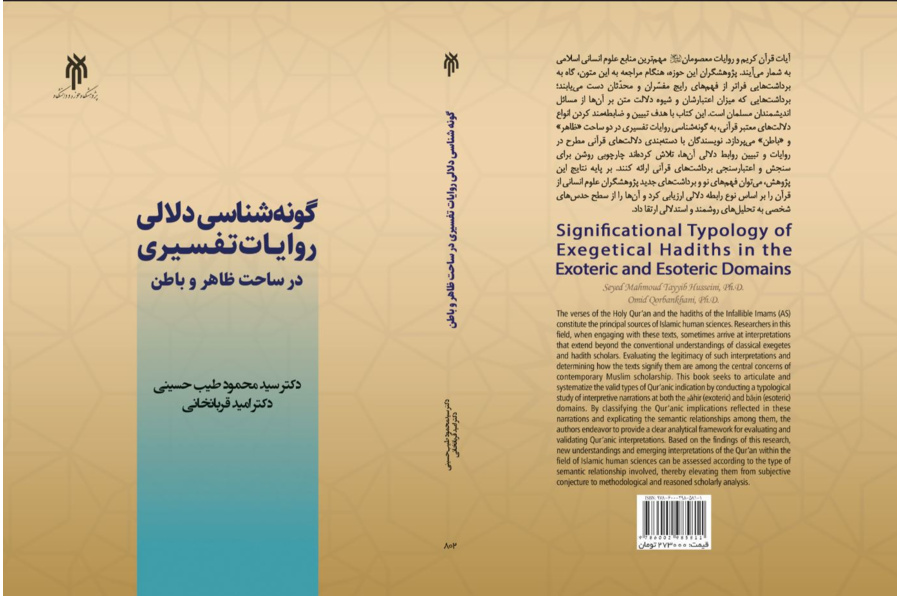
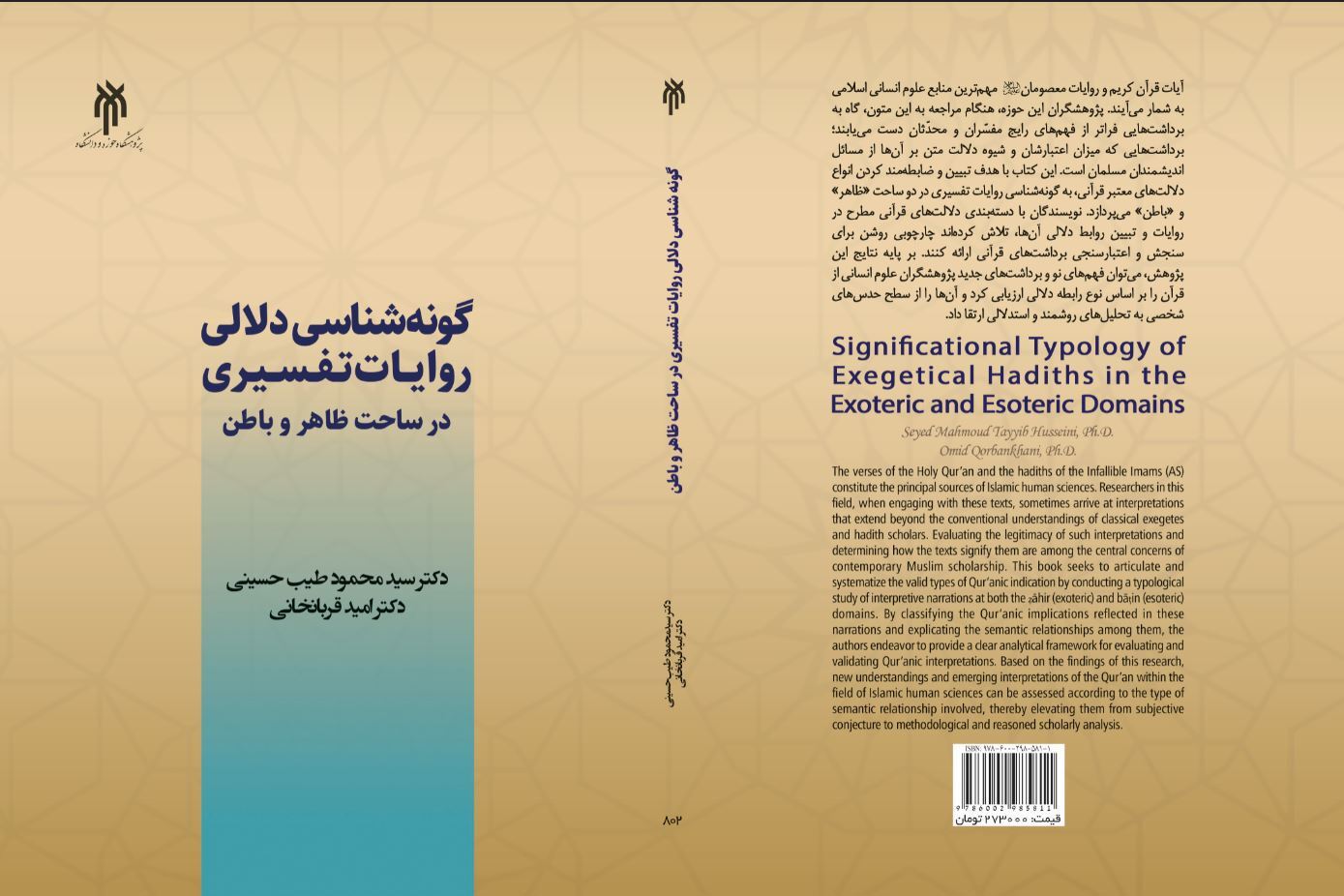
گونهشناسی دلالی روایات تفسیری در ساحت ظاهر و باطن
Significational Typology of Exegetical Hadiths in the Exoteric and Esoteric Domains
آیات قرآن کریم و روایات معصومان (ع) مهمترین منابع علوم انسانی اسلامی به شمار میآیند. پژوهشگران این حوزه، هنگام مراجعه به این متون، گاه به برداشتهایی فراتر از فهمهای رایج مفسّران و محدّثان دست مییابند؛ برداشتهایی که میزان اعتبارشان و شیوه دلالت متن بر آنها از مسائل اندیشمندان مسلمان است. این کتاب با هدف تبیین و ضابطهمند کردن انواع دلالتهای معتبر قرآنی، به گونهشناسی روایات تفسیری در دو ساحت «ظاهر» و «باطن» میپردازد. نویسندگان با دستهبندی دلالتهای قرآنی مطرح در روایات و تبیین روابط دلالی آنها، تلاش کردهاند چارچوبی روشن برای سنجش و اعتبارسنجی برداشتهای قرآنی ارائه کنند. بر پایه نتایج این پژوهش، میتوان فهمهای نو و برداشتهای جدید پژوهشگران علوم انسانی از قرآن را بر اساس نوع رابطه دلالی ارزیابی کرد و آنها را از سطح حدسهای شخصی به تحلیلهای روشمند و استدلالی ارتقا داد.
Significational Typology of
Exegetical Hadiths in the
Exoteric and Esoteric Domains
Seyed Mahmoud Tayyib Husseini, Ph.D.
Omid Qorbankhani, Ph.D.
The verses of the Holy Qur’an and the hadiths of the Infallible Imams (AS) constitute the principal sources of Islamic human sciences. Researchers in this field, when engaging with these texts, sometimes arrive at interpretations that extend beyond the conventional understandings of classical exegetes and hadith scholars. Evaluating the legitimacy of such interpretations and determining how the texts signify them are among the central concerns of contemporary Muslim scholarship. This book seeks to articulate and systematize the valid types of Qur’anic indication by conducting a typological study of interpretive narrations at both the ẓāhir (exoteric) and bāṭin (esoteric) domains. By classifying the Qur’anic implications reflected in these narrations and explicating the semantic relationships among them, the authors endeavor to provide a clear analytical framework for evaluating and validating Qur’anic interpretations. Based on the findings of this research, new understandings and emerging interpretations of the Qur’an within the field of Islamic human sciences can be assessed according to the type of semantic relationship involved, thereby elevating them from subjective conjecture to methodological and reasoned scholarly analysis.
 سروش
سروش