
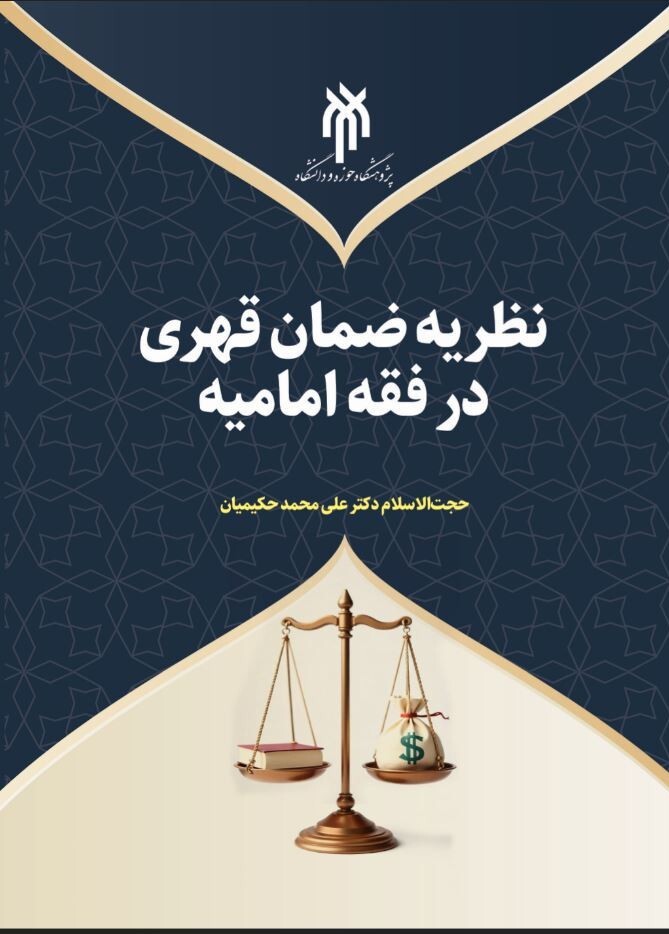
نظر یه ضمان قهری در فقه امامیه
The Theory of Forced Guarantee in Imamiyya Jurisprudence
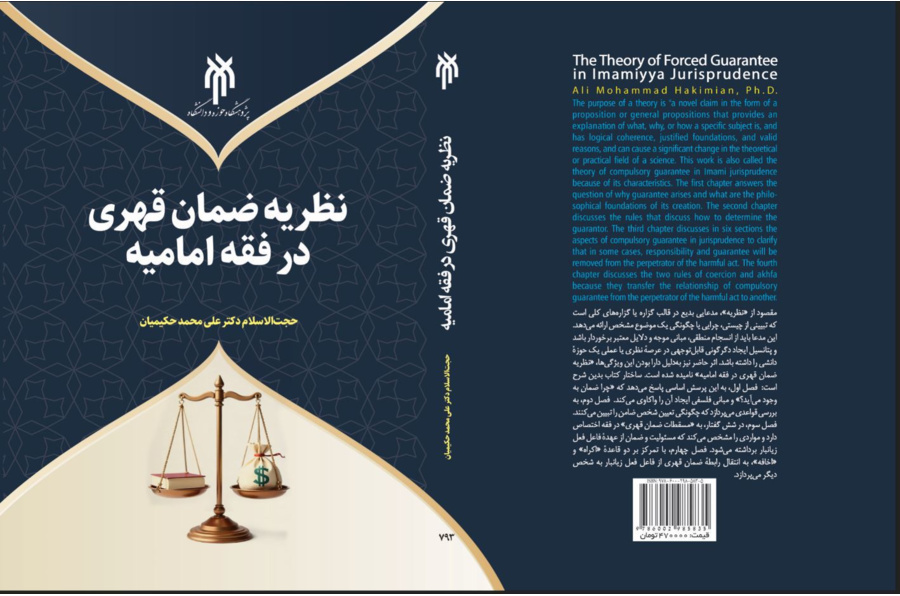
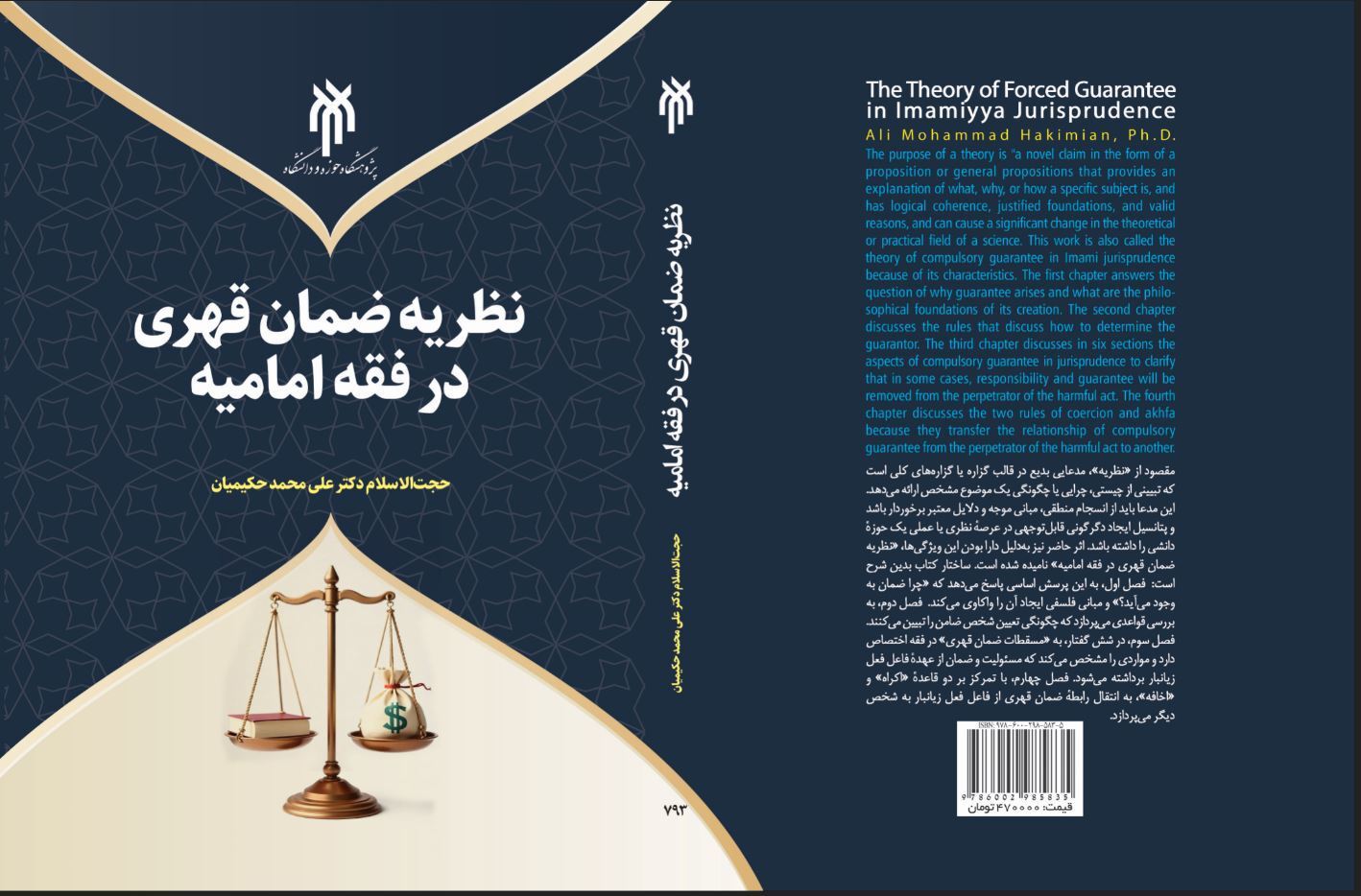
مقصود از «نظریه»، مدعایی بدیع در قالب گزاره یا گزارههای کلی است که تبیینی از چیستی، چرایی یا چگونگی یک موضوع مشخص ارائه میدهد. این مدعا باید از انسجام منطقی، مبانی موجه و دلایل معتبر برخوردار باشد و پتانسیل ایجاد دگرگونی قابلتوجهی در عرصهٔ نظری یا عملی یک حوزهٔ دانشی را داشته باشد. اثر حاضر نیز بهدلیل دارا بودن این ویژگیها، «نظریه ضمان قهری در فقه امامیه» نامیده شده است. ساختار کتاب بدین شرح است: فصل اول، به این پرسش اساسی پاسخ میدهد که «چرا ضمان بهوجود میآید؟» و مبانی فلسفی ایجاد آن را واکاوی میکند. فصل دوم، به بررسی قواعدی میپردازد که چگونگی تعیین شخص ضامن را تبیین میکنند. فصل سوم، در شش گفتار، به «مسقطات ضمان قهری» در فقه اختصاص دارد و مواردی را مشخص میکند که مسئولیت و ضمان از عهدهٔ فاعل فعل زیانبار برداشته میشود. فصل چهارم، با تمرکز بر دو قاعدهٔ «اکراه» و «اخافه»، به انتقال رابطهٔ ضمان قهری از فاعل فعل زیانبار به شخص دیگر میپردازد.
The Theory of Forced Guarantee
in Imamiyya Jurisprudence
Ali Mohammad Hakimian, Ph.D.
The purpose of a theory is "a novel claim in the form of a proposition or general propositions that provides an explanation of what, why, or how a specific subject is, and has logical coherence, justified foundations, and valid reasons, and can cause a significant change in the theoretical or practical field of a science. This work is also called the theory of compulsory guarantee in Imami jurisprudence because of its characteristics. The first chapter answers the question of why guarantee arises and what are the philosophical foundations of its creation. The second chapter discusses the rules that discuss how to determine the guarantor. The third chapter discusses in six sections the aspects of compulsory guarantee in jurisprudence to clarify that in some cases, responsibility and guarantee will be removed from the perpetrator of the harmful act. The fourth chapter discusses the two rules of coercion and akhfa because they transfer the relationship of compulsory guarantee from the perpetrator of the harmful act to another.
 سروش
سروش